15 Proven Tips to Get Rid of Pharaoh Ants in Santa Clarita Homes & Businesses
Expert tips to spot, prevent & eliminate stubborn Pharaoh ant infestations
Picture this…
You’re sipping your morning coffee, enjoying a quiet moment before the hustle and bustle of the day, and then you spot it: A messy trail of tiny yellowish-red ants marching across your counter like they own the place!
Meet the Pharaoh ant (Monomorium pharaonis), the bane of homes, hospitals, and businesses across Santa Clarita. These sneaky, resilient ants are more than just an annoyance. Their hidden nests, multiple queens, and ability to split into satellite colonies when threatened make them one of the toughest pests to eliminate.
Already dealing with Pharaoh ants? If you’re under siege call No Bugs at (661) 294-0206 or fill out our online contact form for expert Pharaoh ant control in Santa Clarita, San Fernando, and nearby service areas in the greater Los Angeles County.
How to Identify Pharaoh Ants in Santa Clarita
They hide in walls. They build multiple nests. They don’t go down easy.
Pharoah ants aren’t your average picnic ants. In fact, you will probably never see them outside.
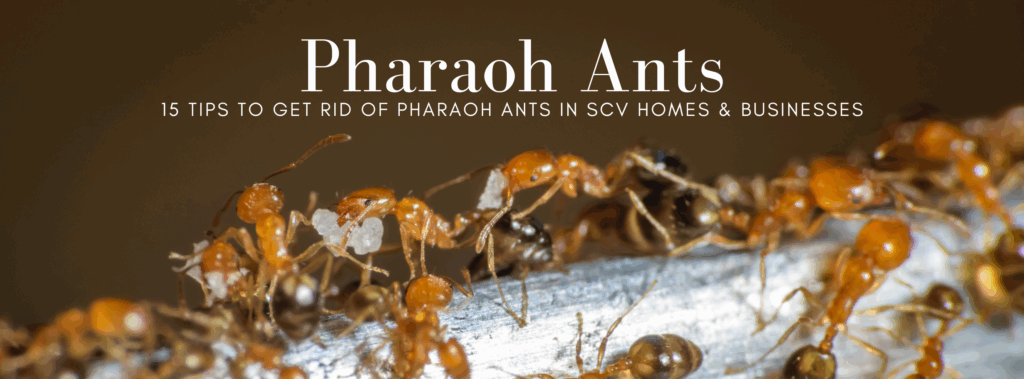
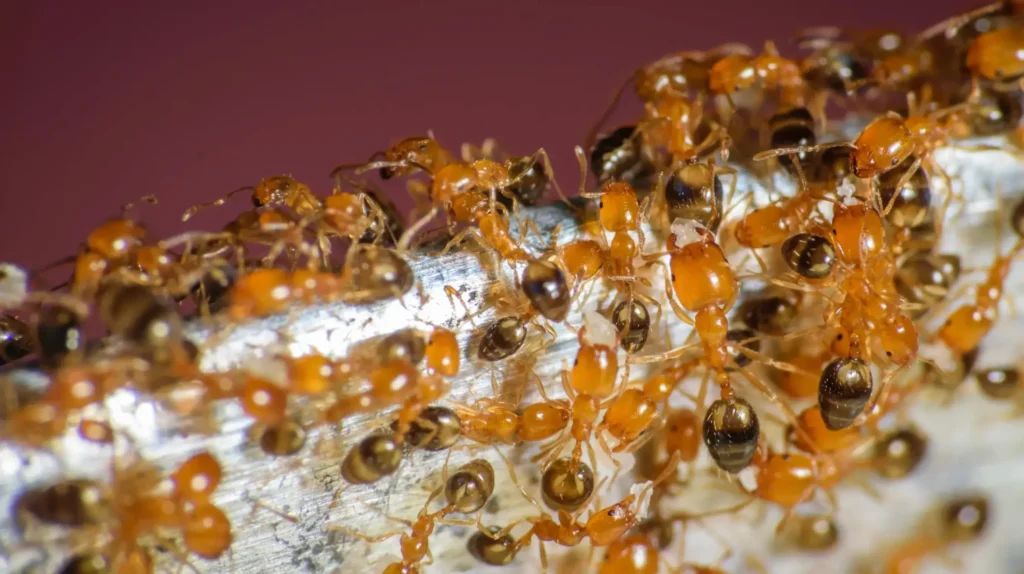
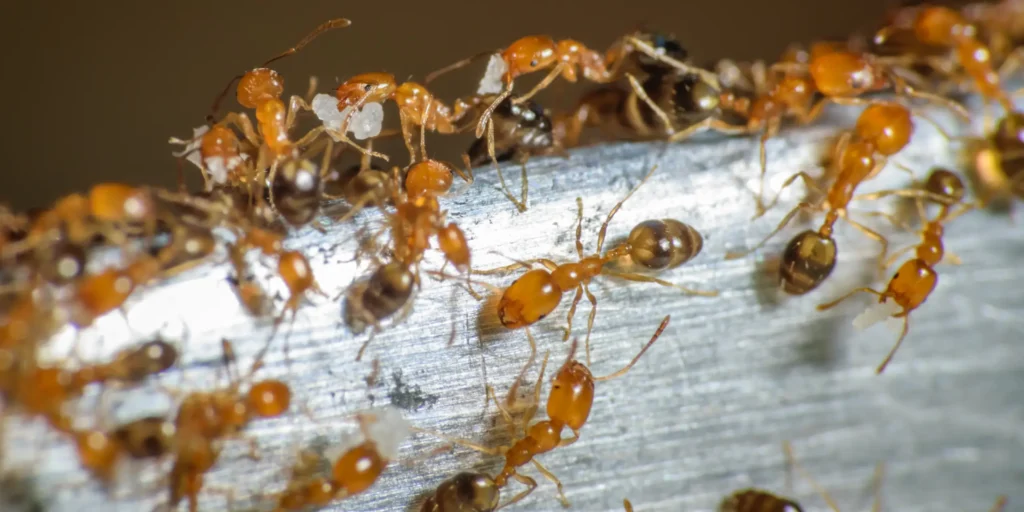
They’re only about 1/16 inch long, pale yellow to reddish-brown with darker abdomens, and they nest deep inside walls, appliances, and other hidden voids.
They are notorious for forming multi-queen colonies that spread by “budding,” which is when the colony breaks off to form a new nest. This is often triggered by stress or feeling threatened by ineffective treatment options.
That means a single mishandled spray can double or triple the problem overnight.
Physical Characteristics
- Size: About 1/16 inch (1.5–2 mm) long; small enough to fit through the tiniest gaps or even to be mistaken for dirt.
- Color: Pale yellow to reddish-brown with a darker abdomen.
- Body: Smooth thorax with no spines; two nodes between thorax and abdomen.
Colony Structure
Pharaoh ant colonies are polygynous, meaning they have multiple queens. This allows them to reproduce rapidly and recover from partial extermination attempts.
Identifying Trails & Behaviors
You’ll see thin lines of pale ants marching between the nest and food. They leave pheromone trails which recruits follow rigorously, sometimes switching between sugary and protein‑rich foods over time due to satiation and alternation feeding behavior.
Lifecycle & Reproduction
Understanding their lifecycle is key to controlling them:
- Egg: Laid by queens, hatch in 5–7 days.
- Larva: Fed by workers for 18–20 days.
- Pupa: Transform into adults in about 9 days.
- Adult: Workers live 9-10 weeks; queens can live 4–12 months and lay up to 400 eggs.
Why it matters: With multiple queens laying eggs year-round indoors, even a small colony can explode in population within weeks.
Where Pharaoh Ants Nest in Southern California
Look closely in kitchens, bathrooms, wall baseboards, curtain rods, papers, and linens. They often nest in hidden, inaccessible voids and follow thin foraging trails to food sources. They love sugary and greasy items, even weird things like toothpaste!
- Inside wall voids, baseboards, and cabinetry
- Behind outlet covers and light switch plates
- In curtain rods, folded linens, and stored paper goods
- Near appliances that give off heat or moisture
- In bathrooms and kitchens, especially around plumbing
- Inside plumbing chases, electrical conduits, or HVAC systems
These ants can infest kitchens, bathrooms, bedrooms, and even medical or commercial facilities — essentially anywhere with warmth, moisture, and a steady food source.
Why Pharaoh Ants Are Hard to Eliminate
- Budding: When stressed (by sprays, intense heat, poor bait placement, etc.), colonies split into two or more smaller colonies, making the infestation spread.
- Hidden Nests: They prefer nesting inside walls, behind baseboards, and in electrical boxes. In other words, safe places that are difficult to reach.
- Food Flexibility: They switch between sweet and protein food sources, sometimes weekly.
- Multiple Foraging Trails: Workers forage in different locations at the same time, making DIY treatments challenging.
- Main Challenge: Multiple queens and hidden nests make them incredibly hard to eradicate.
Common Mistakes in Pharaoh Ant Control
- Using Repellent Sprays: Causes colony fragmentation.
- Wrong Bait Type: Using only sugar bait when they’re on a protein phase (or vice versa).
- Poor Sanitation: Leaving food sources (crumbs, grease, etc.) that outcompete your bait.
- Treating One Area: Missing or ignoring other active foraging trails.
Why Spraying Makes Pharaoh Ant Infestations Worse
Most over-the-counter sprays contain repellent insecticides. When sprayed, Pharaoh ants panic, splitting into multiple colonies, a survival tactic called colony fragmentation. The workers will scatter and queens will establish new satellite nests.
What started as one infestation can turn into several, with each nest hidden and difficult to reach.
This results in:
- More nests to treat
- Wider spread throughout your property
- Longer infestation timelines
The only proven long-term control method is targeted baiting with professional-grade products designed to spread throughout the colony before the ants realize they’re under attack.
Why Pharaoh Ants Love Santa Clarita (A Little Too Much)
Santa Clarita’s sunny charm doesn’t just attract families, it draws in pests like a five-star resort. Our warm, dry climate and year-round indoor heating create ideal conditions for Pharaoh ants to thrive.
Your cozy home or business provides:
- Perfect temperature stability for breeding year-round.
- Abundant food sources in kitchens, pantries, and trash.
- Hidden travel routes through electrical, plumbing, and HVAC systems.
These ants don’t knock. They sneak in and set up camp, especially in buildings with lots of little crevices and food.
How Do Pharaoh Ants Enter Homes?
Pharaoh ants are primarily indoor pests. They don’t establish big colonies outside and march indoors like Argentine ants or odorous house ants (the other renown ant menaces of SCV).
Instead, they typically enter homes in a few ways:
1. Hitchhiking in Items
Pharaoh ants are notorious for being transported in groceries, boxes, potted plants, used furniture, appliances, and even laundry from an infested location. Once inside, they establish colonies in hidden, warm, humid spots.
2. Already Present in Connected Structures
In multi-unit housing, hospitals, or commercial buildings, pharaoh ants spread through wall voids, plumbing lines, electrical conduits, and HVAC systems from one unit to another. This means a “new” infestation might actually be a case of migration from a neighboring unit, not from outdoors.
3. Protected exterior-to-interior movement (Rare)
In very warm climates or during summer in temperate areas, Pharaoh ants might survive outdoors in mulch beds, plant pots, or cracks near heated structures. They then travel indoors via expansion joints, weep holes, or around utility lines. However, this is a rare situation.
Health Risks & Business Impact
Despite their size, Pharaoh ants are linked to the spread of pathogens such as Salmonella, Streptococcus, and Clostridium (botulism).
- In homes: Contaminate food and prep areas.
- In hospitals: Known to infest IV lines, dressings, and sterile equipment.
- In restaurants: Even a minor infestation can ruin customer trust and lead to failed health inspections.
5 Signs of a Pharaoh Ant Infestation
Think you’ve just got a few stray ants? If they’re Pharaoh ants, that “few” could mean thousands hiding in your walls.
It’s important to identify what type of ant you are dealing with before applying a treatment.
As previously mentioned, Pharaoh ants are famous for “budding” when threatened. If they are hit by the wrong type of product, they will split their colony in two (or three…or four), which is why spraying or baiting them with general store-bought products often makes the infestation explode rather than disappear. Full eradication often requires the products and expertise of a licensed pest control company.
Here’s some criteria to help you determine if you’re dealing with Pharaoh ants:
1. Appearance
Workers are tiny – about 1/16 inch long – with yellow to reddish bodies and a darker abdomen. Blink and you’ll miss them.
2. Chaotic Trails
Unlike ants that march neatly, Pharaoh ants move in messy, wandering trails that seem to appear and disappear at random. You can often find these ant highways on countertops, walls, and baseboards.
3. Found in (Un)Expected Places
Kitchen? Sure. But also, bathrooms, laundry rooms, nightstands, and even inside electronics. They’ll set up shop anywhere warm and close to water. This includes inside walls, under appliances, and even in curtain rods. Basically, they love all the places you wouldn’t think to look!
4. Invade Multiple Areas
Seeing them in different rooms at the same time? That’s because they have multiple satellite colonies working together.
5. They Come Back
You spray, they vanish… and then they’re back, sometimes in more places than before. That’s “budding,” their survival trick where they split into new colonies when threatened.
What Do Pharaoh Ants Eat?
These tiny troublemakers aren’t picky. They’ll snack on sweets, proteins, grease, and even dead insects, switching their menu based on the colony’s needs, which makes them even harder to control without professional help.
Pharaoh ants are opportunistic feeders, which means they’ll eat just about anything they can find, but their menu has some favorites:
- Sweets: syrups, honey, jelly, fruit juices, sugary crumbs.
- Proteins: meats, peanut butter, cheese, pet food.
- Grease and fats: cooking oils, butter, fatty foods.
- Dead insects: Scavenged from around the home.
- Variety based on colony needs: They can switch between sweet and protein preferences depending on the time of year and what the colony (especially the brood) needs.
In nature (and in large buildings), they’ll also feed on plants, blood residue, or medical waste, which is why they’re such a problem in hospitals.
15 Effective Tips to Reduce, Prevent & Eliminate Pharaoh Ant Infestations
Pharaoh ants are tiny, invasive pests that can quickly turn into a major problem if left unchecked. Known for nesting deep inside walls, traveling through hidden pathways, and splitting into multiple colonies when disturbed, they’re one of the toughest ants to control.
Whether you’re dealing with a small sighting or a full-blown infestation, these proven Do-It-Yourself tips will help you prevent, contain, and even eliminate Pharaoh ants before they take over your home or business.
Pharaoh ants are one of the hardest pests to eliminate without help. While some steps below can slow an infestation, complete eradication requires the tools and expertise of a licensed pest control company.
Already dealing with Pharaoh ants? If you’re under siege call No Bugs at (661) 294-0206 or fill out our online contact form for expert Pharaoh ant control in Santa Clarita, San Fernando, and nearby service areas in the greater Los Angeles County.
1. Bait, Don’t Spray
What do spray treatments, cleaning products, and natural remedies, including essential oils, all have in common? They scatter Pharaoh ants and encourage them to split into more colonies.
Instead, the safest and most effective approach is to utilize slow-acting, professional-grade bait stations designed for indoor use. Ants carry the bait back to the nest and share it, eventually wiping out the whole colony.
Ants adapt quickly, so it’s advisable to switch bait brands or active ingredients (sugar baits, protein baits, boric acid, etc.) every 7–10 days to keep them feeding. You also must ensure that the product isn’t too strong, or the ants will die before transporting the pesticide back to the colony. Keep the bait fresh and replace any that’s dried out or been ignored.
Pro Insight: Over-the-counter baits often dry out or have the wrong formulation. Professionals use fresh, non-repellent baits designed to be irresistible and lethal to Pharaoh ants.
While baiting is the most effective DIY approach, Pharaoh ants are masters at hiding deep inside walls, electrical outlets, and other hard-to-reach areas. Even with perfect bait rotation, a single missed satellite colony can restart the infestation in mere weeks.
A licensed pest control professional can identify nesting sites, use professional-grade, non-repellent treatments that ants can’t detect, and apply advanced baiting strategies that work faster to eliminate the colony.
For example, sterilizers and insect growth regulators can prevent the queens from laying eggs and interrupt the natural development of larvae. For true peace of mind, and to ensure the problem is gone for good, calling in the pros is always the smartest move.
What Licensed Pest Control Experts Can Do:
- Use non-repellent baits that won’t scatter colonies.
- Utilize products that contain sterilizers and insect growth regulators.
- Can identify and treat hard-to-reach nesting spots inside walls.
- Monitor, follow up, and build a fortress of defense.
2. Target All Active Trails
Pharaoh ants often forage in multiple areas and at different heights — along floors, countertops, shelves, and even ceilings. Placing bait in just one location may not reach the entire colony. Identify all active trails and position bait stations at each level so workers from multiple satellite nests can carry the pesticide back to their queens.
Pro Insight: A licensed technician can track multiple colonies at once and place bait in locations you may never think to check!
3. Coordinate Treatments in Connected Spaces
Pharaoh ants don’t respect property lines. In apartments, townhomes, offices, and commercial buildings, they can easily travel through plumbing lines, electrical conduits, and ventilation systems to neighboring units. If only one space is treated, the ants may relocate temporarily, then return. Coordinate with neighbors, property managers, or other tenants to ensure every connected area is inspected and treated at the same time for the best results.
Pro Insight: Isolated DIY treatments in one unit rarely work. Building-wide coordination is key, which is why professional pest control teams work directly with property managers to treat every affected space at the same time.
4. Seal Entry Points
Pharaoh ants rarely invade from the exterior of your property. You’re far more likely to inherit a satellite colony if you share walls with a neighbor. Your best bet to keep out a traveling colony is to seal entry points that provide access into your interior spaces.
For example, close off hidden travel routes:
- Gaps around pipes, wiring, and ductwork
- Spaces along baseboards and crown molding
- Cracks around outlet covers and switch plates
This can slow their spread and improves bait effectiveness.
5. Deep Clean & Remove Competing Food Sources
What would you rather eat, bait goo or a burger?
Even microscopic crumbs can attract Pharaoh ants and reduce bait effectiveness. Wipe up spills immediately, clean under appliances, sanitize under sinks, and store all snacks in sealed containers. The cleaner your space, the more likely ants will target your bait.
Even a crumb or grease smear can pull ants away from bait. Clean:
- Under appliances
- Inside cabinets and drawers
- Along baseboards and flooring edges
A vinegar-and-lemon spray works as a degreaser and disrupts scent trails. Focus on kitchen counters, pantries, and warm spots near water sources where they like to forage.
6. Store Food in Airtight Containers
Pharaoh ants can slip into loosely sealed packaging. Keep cereals, snacks, and baking goods in airtight jars or tubs. Avoid leaving bread or pastries uncovered and refrigerate opened packages when possible.
7. Take Out the Trash Daily
Trash is an ant buffet. Empty bins nightly, rinse recyclables, and scrub trash cans weekly with a vinegar mix or soapy water to remove residues and odors that attract ants.
8. Keep Pet Feeding Areas Clean
Pharaoh ants love pet food. And unfortunately, they would rather eat Chicken & Salmon with Gravy over bait goo.
Use feeding mats under bowls, wipe them after each meal, and store dry pet food in sealed containers. A raised, easy-to-clean feeding area helps spot and remove crumbs quickly.
9. Control Indoor Moisture Sources
Pharaoh ants often choose warm, damp nesting spots.
Keep the following tips in mind if you’re experiencing an infestation:
- Repair dripping faucets, leaky pipes, and sweating water lines.
- Unclog slow drains and check appliances like dishwashers, refrigerators, and ice makers for leaks.
- Keep areas under sinks, near dishwashers, around water heaters, and in basements or laundry rooms dry, using a dehumidifier if needed.
10. Inspect Electrical & Utility Access Points
Ants often nest behind outlet covers or inside electrical boxes. Check for activity, seal gaps leading into wall voids, and ask a pest control technician about setting up bait in areas of concern.
11. Prevent Ant Hitchhiking
Pharaoh ants can travel by hiding inside boxes, bags, laundry baskets, or even appliances when they’re moved between rooms or buildings. Before bringing items into a clean area, inspect them for ant activity, especially if they’ve been stored near a known infestation.
12. Erase Ant Trails
Ants leave pheromone scent trails to lead others to food. Vacuum these paths, then clean with vinegar or soapy water to disrupt their navigation system.
Pro Insight: You never want to erase ant trails if you are in the middle of a baiting program. Bait only works if ants are available to take the product back to the nest. If you erase the trail, you cut off the highway leading to your trap, encouraging trails to seek alternative food sources.
13. Monitor Hidden Zones
Check behind appliances, inside curtain rods, around water heaters, and near electronics for activity.
14. Inspect Heat-Producing Appliances
Pharaoh ants are drawn to warm, secluded areas like coffee makers, microwaves, baseboard heaters, and electrical appliances. These overheated zones, often neglected during regular cleaning, can serve as seasonal nesting sites. Periodically pull out or inspect behind these appliances, especially in cooler months when indoor heat becomes the colony’s lifeline.
15. Call a local Santa Clarita Pharaoh Ant Control Expert
Pharaoh ants are among the most challenging pests to eradicate. They hide deep inside walls, build multiple satellite nests, and have several queens capable of restarting a colony if disturbed. Inexperienced DIY attempts—especially sprays—often make the problem worse by causing the colony to split and spread into new areas.
At No Bugs, we’ve spent decades perfecting proven strategies for Pharaoh ant control. We know how to track their movement through walls, plumbing, and wiring channels, and we target every nest with precision. Our trained technicians use professional-grade, non-repellent treatments that ants can’t detect, combined with specialized baiting systems designed to reach every queen and worker.
We’ve seen what happens when infestations are left to “wait and see.” By the time many homeowners call us, Pharaoh ants have moved into pantries, fridges, bathrooms, and even behind appliances. Acting early means we can contain the infestation faster, prevent new colonies from forming, and save you the frustration of repeated reinfestations.
Why No Bugs is Different:
- Expert inspections to locate even the most concealed nests.
- Advanced non-repellent treatments that won’t scatter colonies.
- Precision baiting rotations to match changing food preferences.
- Guaranteed follow-ups to ensure complete eradication.
At No Bugs Termite and Pest Control Inc, we specialize in Pharaoh ant control and use professional-grade baits and treatments designed to eliminate entire colonies, not just scouts and daily trails. Take proactive steps to keep your home safe from these persistent pests by filling out our online contact form or calling (661) 294-0206 to speak with our Santa Clarita Pharaoh ant control experts.
Pharaoh Ant FAQs
Most infestations take 1–3 weeks to control, depending on colony size. Baits work slowly on purpose so the product can be shared throughout the nest before killing the workers and queens.
A rotation of sugar-based, protein-based, and boric-acid based baits can help eliminate a Pharaoh ant infestation. Switch bait types or active ingredients every 7–10 days to match changing food preferences. It’s a complicated dance, which is why most SCV residents turn to professional pest experts to eradicate a Pharaoh ant infestation.
No. Sprays often cause colony fragmentation, encouraging ants to scatter and form new nests. Use slow-acting bait stations or contact No Bugs for effective non-repellant ant treatment options.
Yes. In warm regions like Santa Clarita, summer is peak season for Pharaoh ant activity and indoor invasions. If you’ve noticed more ants this season, our Santa Clarita pest control services can help stop them before they spread.
While not venomous, Pharaoh ants can carry bacteria and contaminate food or surfaces. They’re especially concerning in hospitals, kitchens, and food prep areas. If you own a restaurant or commercial kitchen, see our commercial pest control solutions.
Cleaning helps reduce attractants, but ants will not leave on their own once established. Baiting and other targeted control measures are necessary.
Pheromone trails linger unless removed, and any remaining food or moisture can keep drawing scouts.
Yes. They can travel through plumbing, wiring, and ductwork between units, making building-wide treatment essential. Our team specializes in multi-unit pest control to protect apartments, condos, and offices.
Absolutely. They thrive in restaurants, offices, hospitals, and other commercial spaces where food, warmth, and moisture are available. Explore our commercial pest control services to protect your workplace.
Yes, when the right treatment plan is followed, and preventative measures are maintained. For long-term prevention, ask about our year-round pest protection plans.
Professional Pharaoh Ant Control in Santa Clarita
Pharaoh ants are among the most persistent and difficult pests to eliminate in Santa Clarita. Their hidden nests, multiple queens, and ability to “bud” into new colonies when disturbed make them a serious challenge for homeowners and businesses. While improving sanitation, reducing moisture, and sealing access points can help limit their spread, these measures alone rarely eliminate the problem. Due to the complexity of Pharaoh ant infestations, DIY treatments often make things worse by scattering the colony.
At No Bugs, we use professional-grade, non-repellent products and precision baiting strategies designed to eliminate every nest, including the hidden satellite colonies you can’t see. Our comprehensive pest control plans provide year-round protection, ensuring Pharaoh ants don’t return. These plans include thorough inspections, strategic bait placement, follow-up visits, and same-day service, all backed by a flat monthly fee with a lifetime price guarantee. We also offer one-time treatments with warranties for fast and effective relief.
With decades of industry experience and 14 prestigious service awards, No Bugs Termite and Pest Control Inc is Santa Clarita’s trusted pest control provider. We’re committed to eco-conscious, pet- and family-friendly solutions that deliver lasting results, even against one of the toughest indoor pests.
Don’t risk letting Pharaoh ants spread deeper into your walls and living spaces. Take control of your home by contacting us today at (661) 294-0206 or fill out our online contact form to schedule your free consultation.


7,000+
Neighbors Serviced
4.8/5
Customer Satisfaction Rate